Gross Vehicle Mass upgrades
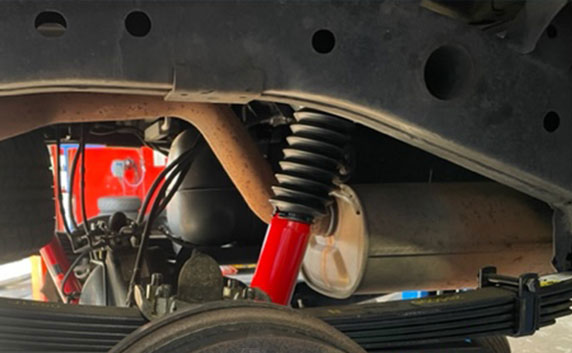
If you regularly carry loads, tow caravans or are packing your 4×4 up for an extended trip, you may be exceeding your gross vehicle mass (GVM), which is illegal and potentially dangerous. With a GVM upgrade you can increase your vehicle’s weight carrying capacity to accommodate your extra load.
Eddy Gobby at DAPCO Bunbury is licensed as a 2nd stage manufacturer, meaning we can legally increase the weight carrying capacity of suitable vehicles. Check out our GVM Upgrade gallery.
Our GVM Upgrades are:
- Certified by the Department of Infrastructure and Transport.
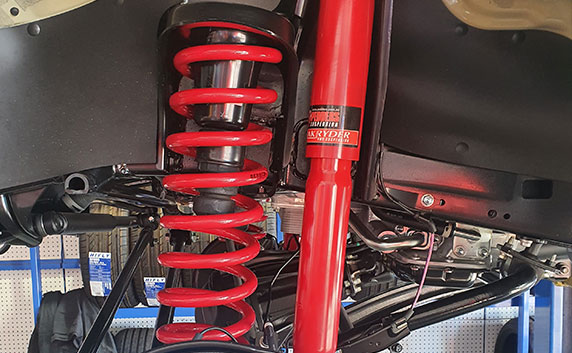
- All suspension components installed as part of a Pedders GVM upgrade package are backed by a Pedders 2 Year/40,000kms Nationwide Warranty.
- Installed at our Bunbury workshop by experienced suspension technicians.
- Available for popular makes and models including Toyota Landcruiser, Ford Ranger, Nissan Patrols, Isuzu MUX, Mazda BT50 and more. See all makes and models here.
NOW AVAILABLE: GVM Upgrades for 48V Hilux up to 3620kg!
We also offer GVM Upgrades for the following popular vehicles – GVM Upgrades for 100 Series IFS Toyota Landcruiser, 105 Series Toyota Landcruiser & Nissan Y61 Patrol.
GVM Upgrade Kits For popular makes & models
Toyota
HiAce LWBHiAce SLWBHiAce 300Hilux Landcruiser 76
Landcruiser 78/79
Landcruiser 100 Series IFS
Landcruiser 105 Series
Landcruiser 200 Series Landcruiser 300 Series
Prado
GVM Upgrade Bunbury Gallery
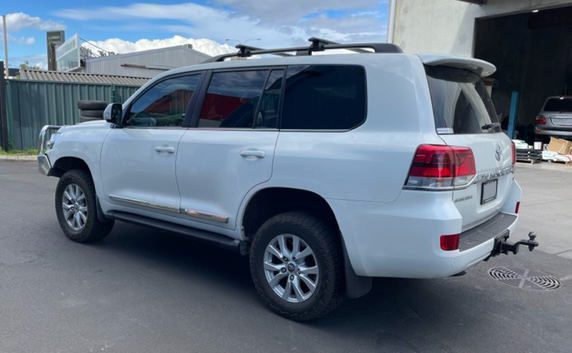
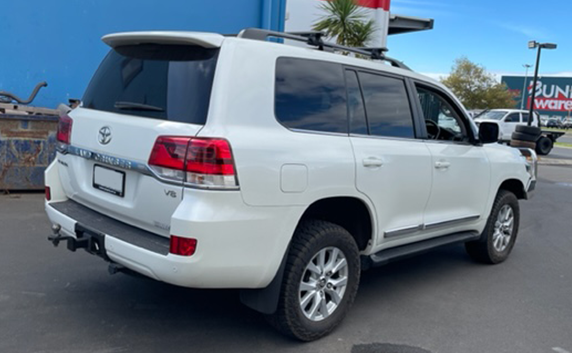
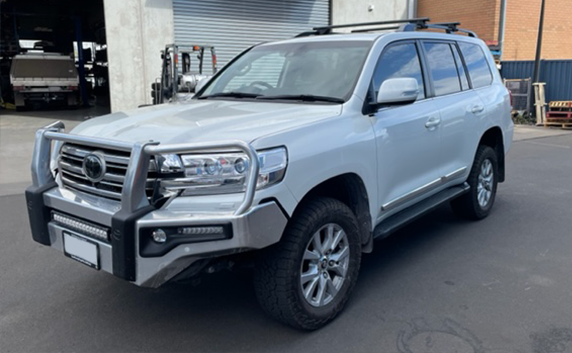
Toyota Landcruiser 200 Series
Original GVM: 3350KG | NEW GVM: 3850KG


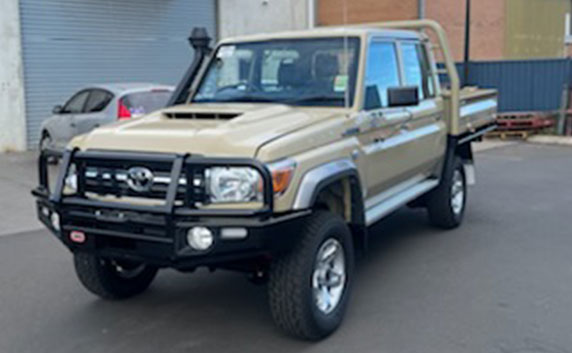
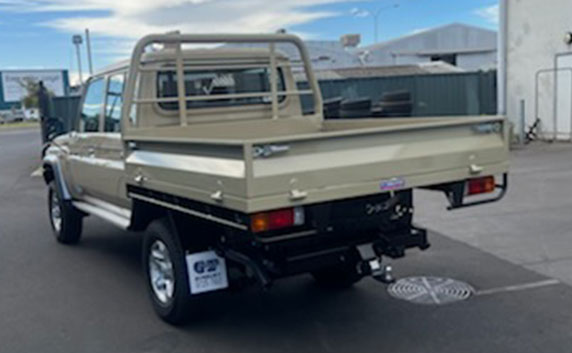
Toyota Landcruiser VDJ79 Series
Original GVM: 3300KG | NEW GVM: 4200KG


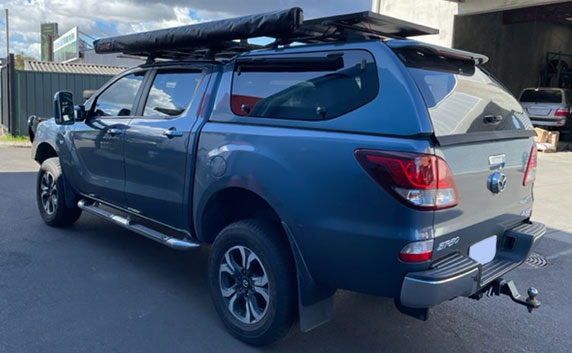
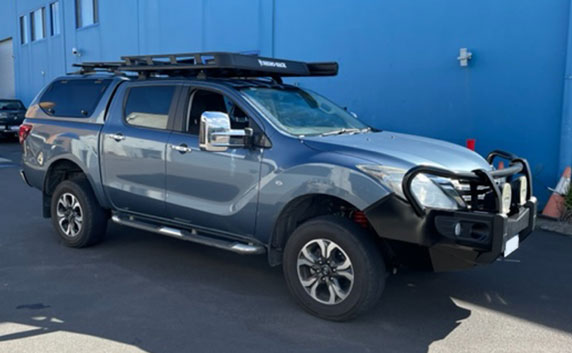
Mazda BT50
Original GVM: 3200KG | NEW GVM: 3500KG


GVM FAQs Understanding GVM Upgrades in WA
A Gross Vehicle Mass (GVM) upgrade is an independently engineered and tested suspension solution which allows users to increase the payload of their vehicle from what the manufacturer originally designated.
If you are carrying common items such as tools, tool boxes, cargo, bull bars, winches, towbars, extra fuel, passengers, recovery gear and tow ball load such as a boat, caravan or camper trailer you will be adding weight to your vehicle and decreasing the available payload. Every vehicle has an official legally allocated GVM which cannot be exceeded.
Without upgrading your vehicles GVM you may be driving a vehicle that doesn’t meet safety regulations or legal requirements.
- Avoid serious fines associated with driving a vehicle that exceeds it’s prescribed GVM, by legally increasing your vehicle payload.
- Avoid insurance issues that may occur if the vehicle is loaded beyond it’s approved GVM.
- Improve overall vehicle stability by ensuring the vehicle suspension can deal with the loads you are carrying.
- Ideal choice for towing caravans, horse floats, camper and general trailers who need that extra load carrying capacity.
- Great for serious four wheel drives fitted with bull bars, winches, recovery equipment, drawer systems, camping gear and underbody protection looking for compliance to the federal and state GVM laws.

Yes, WA formally allows GVM re-ratings for light vehicles (≤4,500 kg GVM) under Department of Transport standards VTB-180A (GVM) and VTB-181A (GCM). Only by an approved engineer and recorded with the Department of Transport (DoT).
Interstate recognition depends on how it’s certified:
Pre-registration (SSM/Federal): treated as second-stage manufacture and recognised nationwide.
Post-registration (State): legal to drive Australia-wide, but if you re-register the vehicle in another state it may need re-certification in that new state.
Pre-registration (pre-rego) GVM upgrades are completed before the vehicle’s first registration under the Federal SSM approval system. This process provides nationwide compliance, with a second compliance plate fitted and no need for extra state-based engineering when selling or transferring. Ideal if you’re buying new or expect to sell interstate.
GVM upgrades are completed on vehicles that are already registered, under WA’s VTB-180A scheme. The vehicle is inspected and certified by a DoT-approved engineer or modifier. While the certification is recognised nationally, re-registering in another state may require re-certification. Ideal if your vehicle is already on the road in WA.
The cost of a GVM upgrade can vary widely depending on your vehicle make and model, the type of suspension kit, and whether it’s a pre or post-registration upgrade.
On average, you can expect to invest between $4,500 and $8,500, which includes certified suspension components, installation, engineering certification, and any required inspections.
Complex upgrades or vehicles with additional modifications may fall at the higher end of the range. The best way to determine the exact cost is to get a tailored quote based on your vehicle setup and load requirements.
A GVM upgrade can affect your warranty and insurance, so always check with your vehicle manufacturer and insurer first, as policies vary between brands and upgrade types.
Warranty: professionally engineered and certified GVM upgrade doesn’t automatically void your factory warranty. In most cases, coverage for the modified components (like suspension) shifts to the second-stage manufacturer or kit provider, while unrelated OEM items remain under the vehicle maker’s warranty. The safest approach is to confirm in writing what remains covered after the upgrade.
Insurance: You should also notify your insurer as soon as the upgrade is complete so your policy reflects the new legal mass rating (and any category change). Supplying the certification paperwork helps ensure you’re fully covered in the event of a claim and avoids non-disclosure issues.
Eligibility depends on the certified kit and engineering available for your specific vehicle model. At DAPCO Bunbury, we install approved GVM upgrade kits for a wide range of popular 4WDs and utes, including the LandCruiser 70, 200 and 300 Series, Ranger, Patrol, D-Max, MU-X, BT-50, Triton, Amarok, HiAce, and Prado.
Pedders’ nationally approved GVM+ range covers many of these models, with the final GVM rating depending on the specific kit approved for your vehicle.
For models outside the pre-approved range, we can arrange certification through a DoT-registered engineer, ensuring your upgrade is fully compliant and legally approved for WA roads.
View examples of completed upgrades in our gallery.
Eligibility depends on the certified kit and engineering available for your specific vehicle model. At DAPCO Bunbury, we install approved GVM upgrade kits for many popular 4WDs and utes, including the LandCruiser 70, 200 and 300 Series, Ranger, Patrol, D-Max, MU-X, BT-50, Triton, Amarok, HiAce, and Prado.
The exact GVM increase varies by model and kit type. Pedders’ certified GVM+ packages cover a wide range of vehicles and include nationwide approval and warranty, you can view the full list of pre-approved models on the Pedders website. For vehicles not covered under a pre-approved kit, we can arrange certification through a DoT-registered engineer to ensure your upgrade is fully compliant and approved.
To see real examples of completed upgrades and what’s possible for your setup, check out our gallery.
In Western Australia, a GVM upgrade must be completed and certified by a licensed Second Stage Manufacturer (SSM) or Licensed Vehicle Modifier (LVM) who is approved by the Department of Transport (DoT). These professionals replace or re-engineer the suspension components and certify the new legal GVM through the correct approval pathway.
The process typically involves an initial assessment and kit selection with a DoT-approved modifier, followed by installation of the certified suspension kit. The vehicle is then engineered and certified under VTB-180A (and VTB-181A if the GCM also changes). Once approved, compliance documentation is issued, pre-registration upgrades receive a second compliance plate, and registration records are updated with the new GVM rating.
Most GVM upgrades can be installed in around one day, depending on your vehicle and the type of kit being fitted. Additional time may be needed for engineering certification and paperwork, particularly for post-registration upgrades. At DAPCO Bunbury, the goal is to complete the installation within the same day, with certification finalised shortly after.
No, increasing your GVM doesn’t automatically increase your GCM or braked towing capacity, as these are separate legal limits. A standard GVM upgrade raises your vehicle’s payload capacity but leaves the total combination weight (GCM) unchanged.
This means if you’re carrying more load on the vehicle itself, you may need to tow less to stay within your GCM. To increase both payload and towing capacity, your vehicle must undergo a combined GVM and GCM upgrade, which involves additional engineering and certification.
Start by locating your vehicle’s GVM rating, it’s listed on the compliance plate or in your owner’s manual. Then, weigh your fully loaded vehicle at a certified public weighbridge and compare the result to that GVM figure. If your actual weight exceeds the rated limit, your vehicle is overweight and non-compliant.
Make sure your measurement includes everything you’re carrying, passengers, fuel, gear, tools, accessories, and the tow-ball download if you’re towing.
You can use a public weighbridge (lists are available through the National Measurement Institute) or a mobile weighing service, which can assess your vehicle and caravan together and provide detailed axle and ball load readings at your home.
Bunbury Workshop Details
128 Blair Street, Bunbury (Opposite Bunnings)